

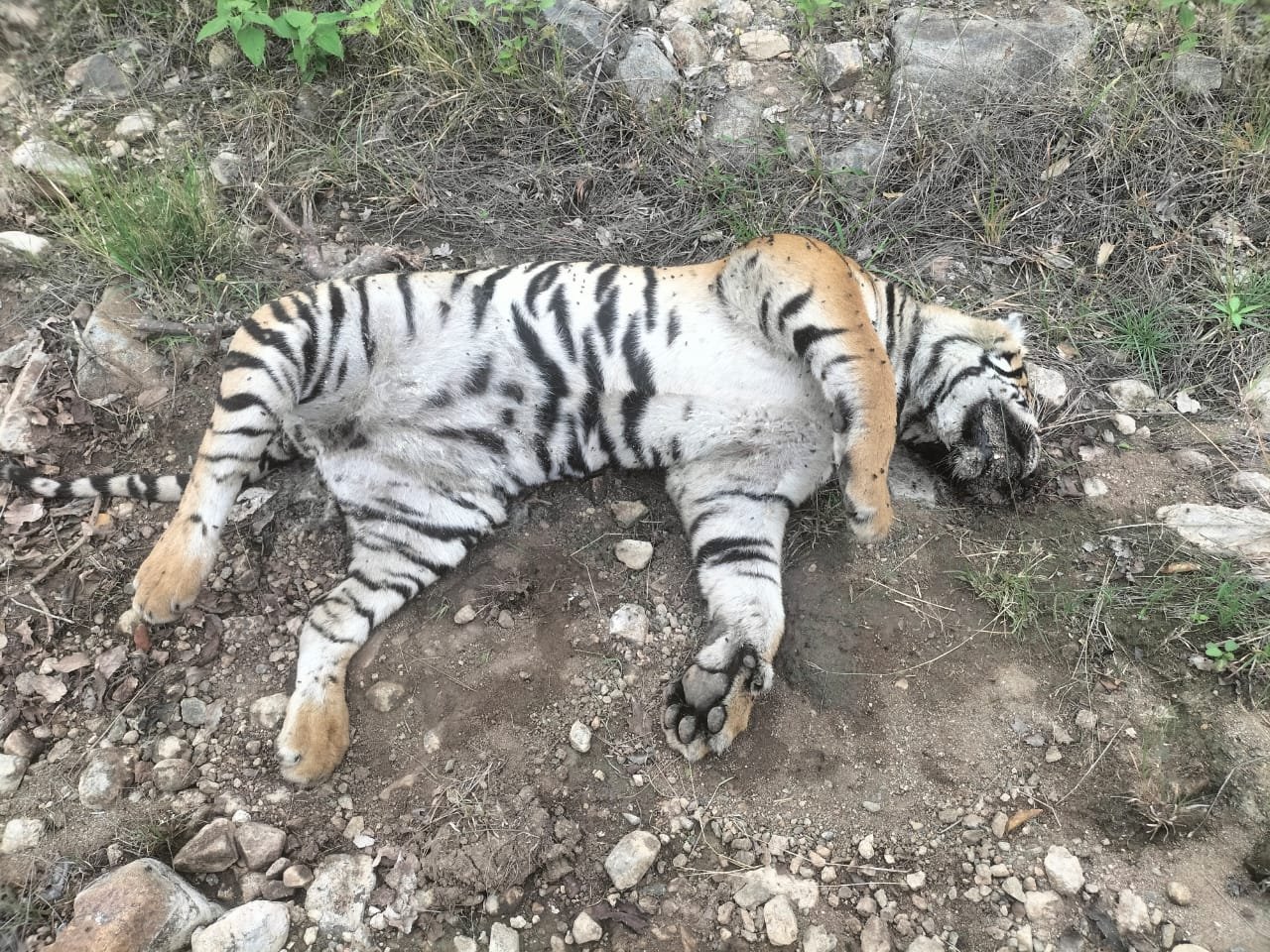
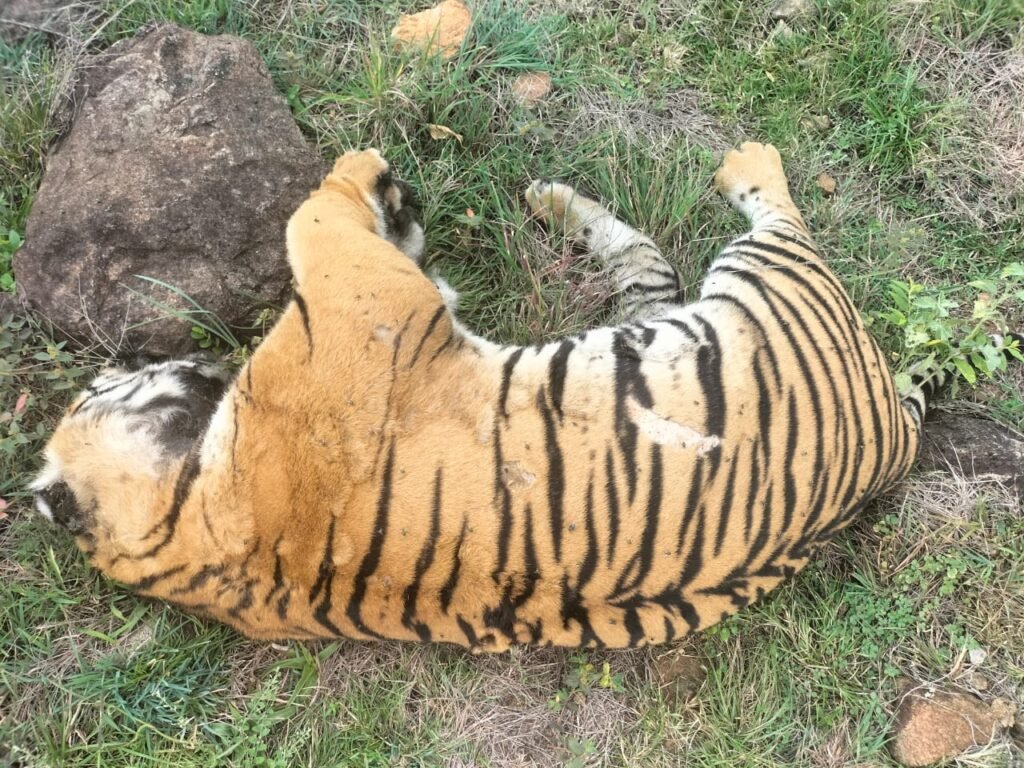
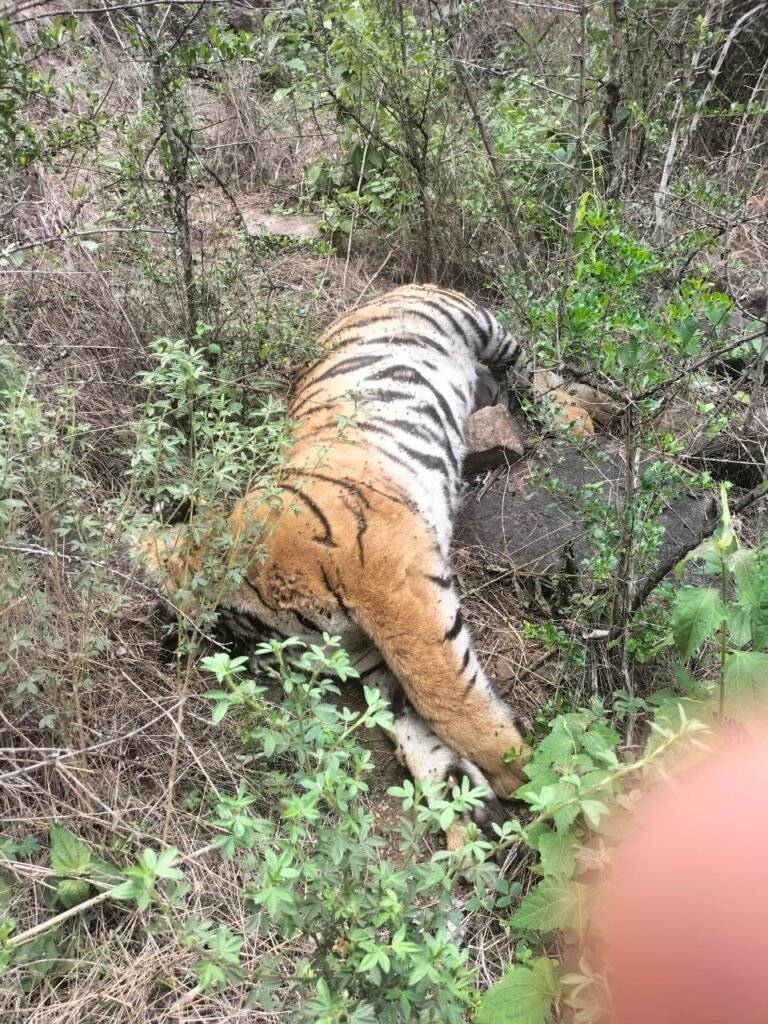
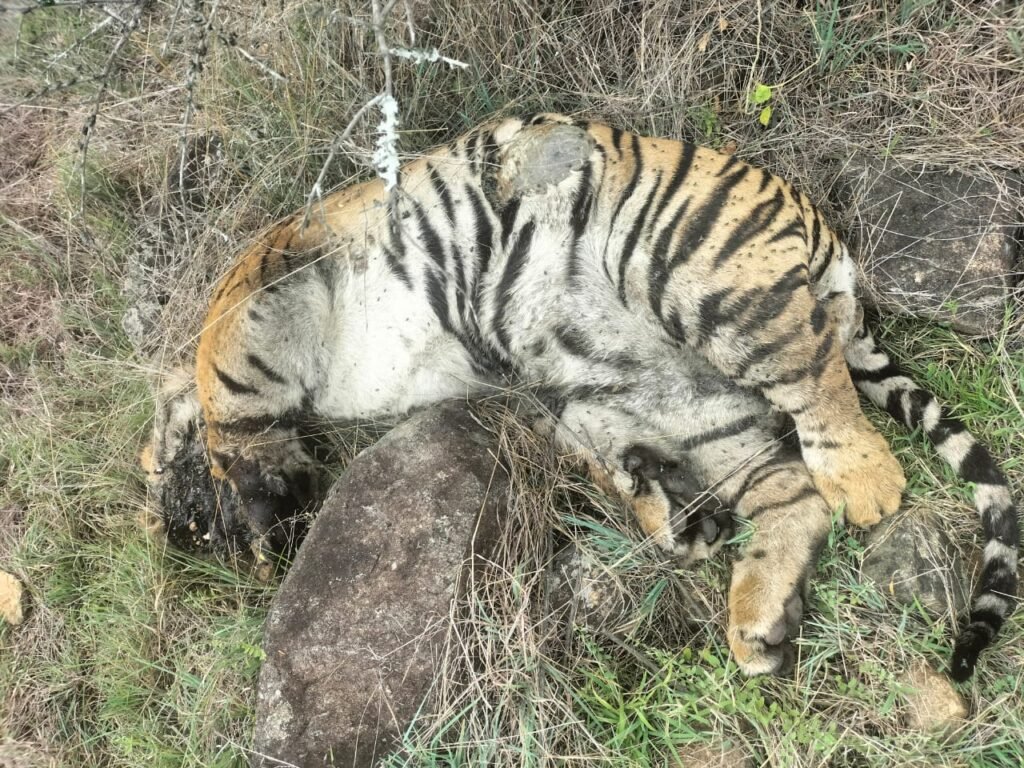
Chamarajanagar, Karnataka: In a deeply troubling development from Karnataka’s forest region, five tigers, including a tigress and her four cubs, have died under suspicious circumstances, prompting a full-scale investigation by forest and wildlife officials. The primary suspicion is that the big cats may have died due to poisoning.
On Friday, post-mortem examinations were conducted on the four tiger cubs, following Thursday’s necropsy of the adult tigress. The process was supervised by a team of forest officers, wildlife experts, and veterinary doctors, and samples have been sent to three separate forensic laboratories for confirmation.
“The cause of death appears to be poisoning. A decomposed cow carcass was found near the site where the tiger deaths occurred, raising the possibility that the cow was laced with poison to target the big cats,” said Principal Chief Conservator of Forests (PCCF) Hiralal, who is heading the investigation.
Officials collected vital organs such as the heart and kidneys from the tiger carcasses, as per National Tiger Conservation Authority (NTCA) protocols. The collected samples were sealed and dispatched to forensic laboratories for toxicology reports.
Key Developments:
- Tigress and four cubs found dead near the carcass of a poisoned cow
- Veterinary teams suspect granular poison substance in initial visual examination
- Organs collected: heart, kidneys, liver and other tissues
- Samples sent to three forensic labs for confirmation
- Forest officials suspect intentional poisoning to kill the tigers
- The deaths occurred within 50 meters of the cow carcass site
According to the veterinary team, the condition of the organs and the presence of granules near the cow’s carcass suggest deliberate poisoning. The investigation team is also examining grievances from local villagers, who may have poisoned the cow to retaliate against livestock attacks by tigers.
“If anyone is found guilty, strict action will be taken. We are requesting local villagers to cooperate with the investigation,” added PCCF Hiralal.
As per NTCA protocol, a joint team comprising representatives from the Wildlife Division, Deputy Conservators of Forests (DCFs), NGO members, and state-level veterinary officers were deployed to ensure transparency and scientific accuracy in the post-mortem process.
The incident has sparked concern among conservationists, who fear this may reflect a larger conflict between wildlife and human habitation in buffer zones of tiger reserves.
Further actions, including community awareness and patrolling enhancements, are expected following the lab results.
About the Author