

Gadag / Lakkundi / Bengaluru: In a rare and astonishing incident, a pot filled with gold ornaments was discovered while digging the foundation for a new house in the historic village of Lakkundi in Gadag district. The incident has left villagers and officials alike stunned.
The discovery was made when a mother and her son, the only members of the family, began excavation work on their private land to construct a new house. While digging the foundation, they came across a buried pot. Out of curiosity, they opened it and were shocked to find gold jewellery, including necklaces, earrings and other ornaments, reportedly weighing several kilograms.
In an era when even buying a few grams of gold requires careful thought due to soaring prices, the discovery of such a large quantity of gold buried underground created a sensation across the village. As news spread, villagers rushed to the spot to witness the unexpected find.
Published In Public Interest by thebengalurulive.com
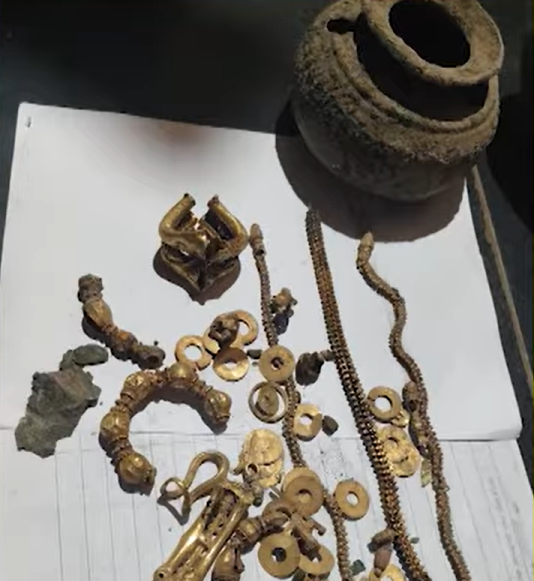

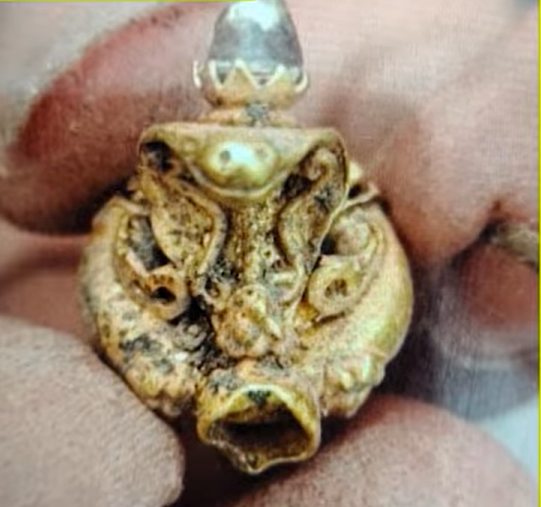
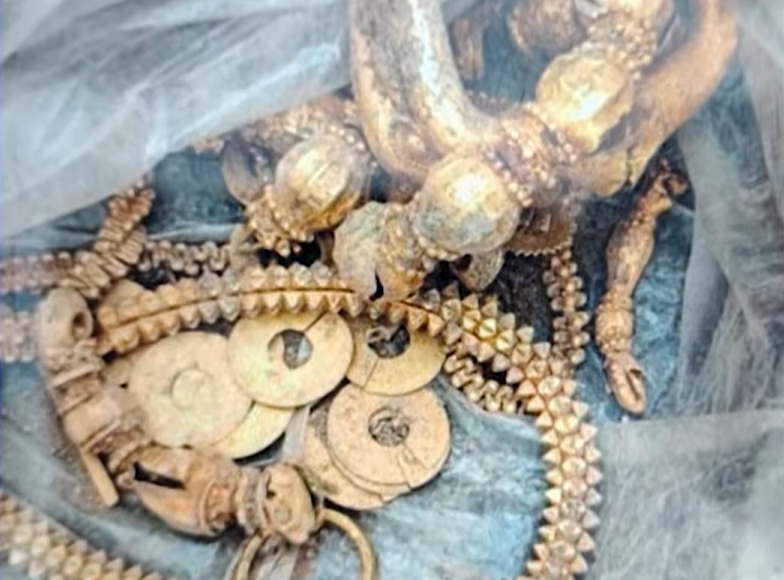
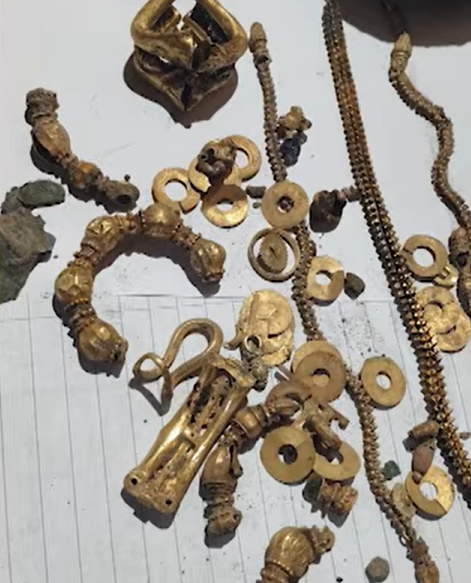
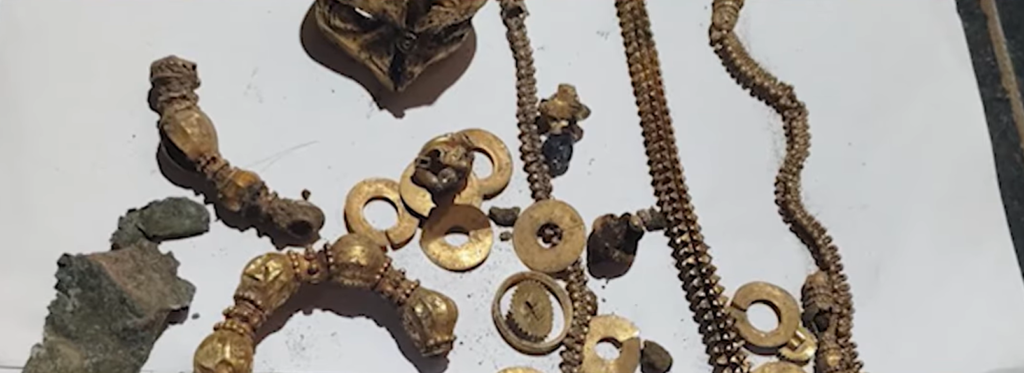
Family Hands Over Treasure to Government Voluntarily
Demonstrating remarkable integrity, the family immediately informed local authorities about the discovery. Members of the Lakkundi Development Authority, officials from the Archaeology Department and the police arrived at the site. The gold was safely shifted and kept under tight security at a local Ganesh temple, with armed police personnel guarding the premises.
The young man who first noticed the pot reportedly insisted that the treasure be handed over to the government, earning widespread praise from villagers and public representatives.
What the Law Says
As per rules, if any treasure found underground is more than 100 years old, it is treated as government property. The district administration must be informed immediately. In such cases, the landowner is generally entitled to one-fifth of the value, subject to the District Collector’s decision. If the treasure is less than 100 years old, proceedings are conducted under the Karnataka Treasure Trove Act, 1962, after a detailed inquiry.
Failure to report such discoveries can attract imprisonment of up to one year. In the Lakkundi case, the family has already handed over the treasure voluntarily, and officials said there is a possibility that the landowners may receive a share, depending on the final decision of the District Collector.
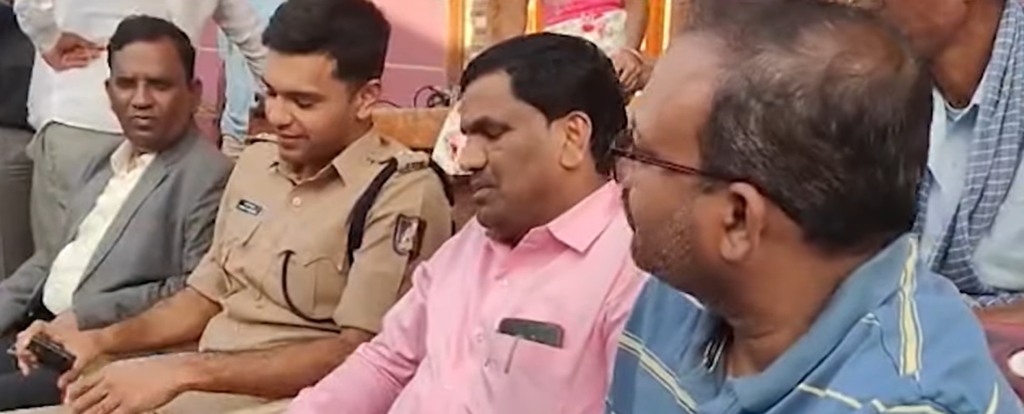
The Archaeology Department will now examine the ornaments to determine their age and historical significance. The incident has once again sparked public fascination around hidden treasures, turning Lakkundi into the centre of attention across the district.
ಇದನ್ನೂ ಓದಿ: ಹೊಸ ಮನೆ ಅಡಿಪಾಯ ತೋಡಿದಾಗ ಬಂಗಾರದ ಖಜಾನೆ ಪತ್ತೆ: ಲಕ್ಕುಂಡಿಯಲ್ಲಿ ನಿಬ್ಬೆರಗಾಗಿಸಿದ ಘಟನೆ
About the Author