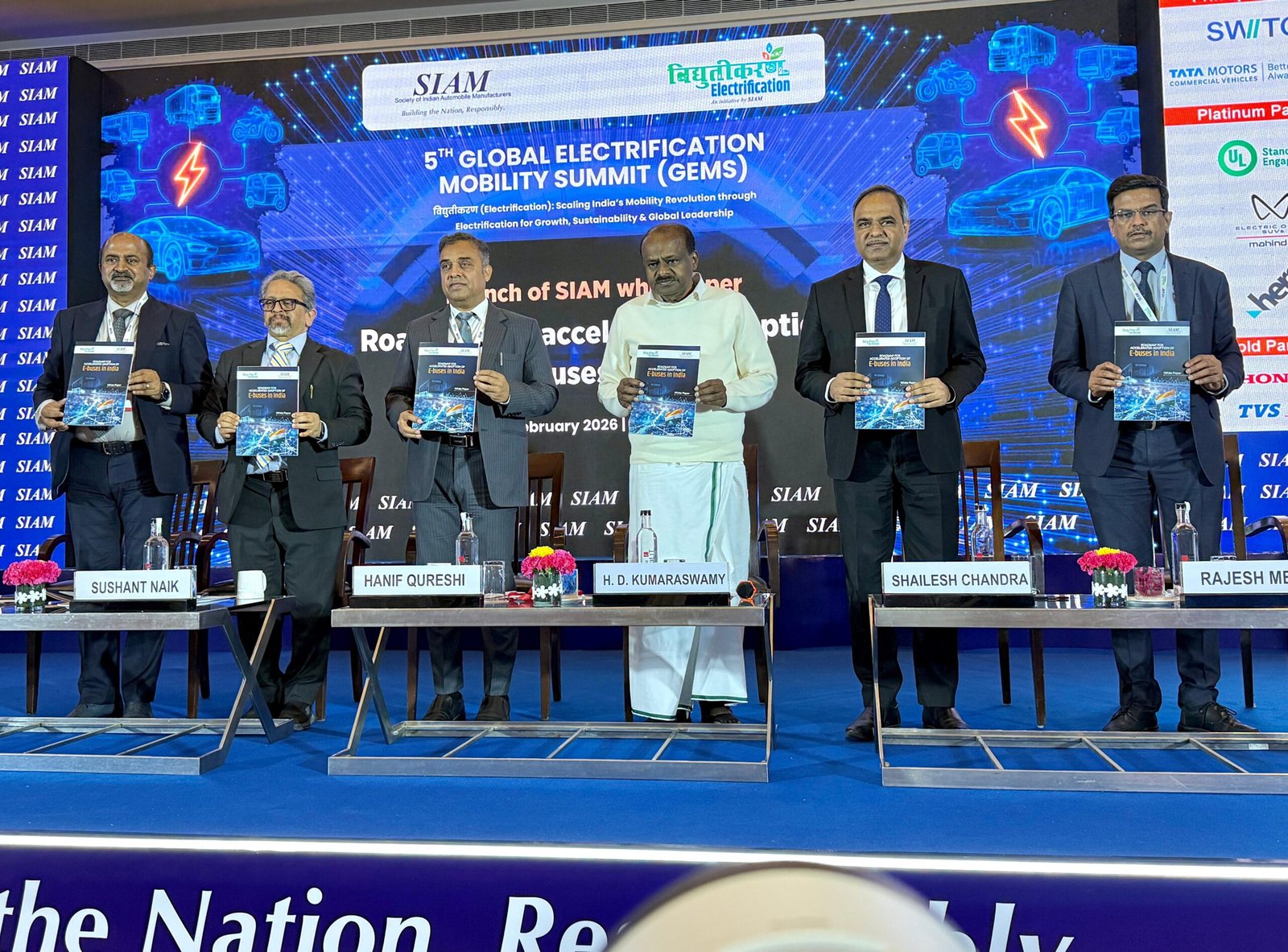
New Delhi / Bengaluru: India’s transition to electric mobility took centre stage at the 5th Global Electrification Mobility Summit (GEMS) 2026 in New Delhi, with the Union Government reiterating that electrification is now a core pillar of India’s growth strategy, industrial policy and climate commitments.
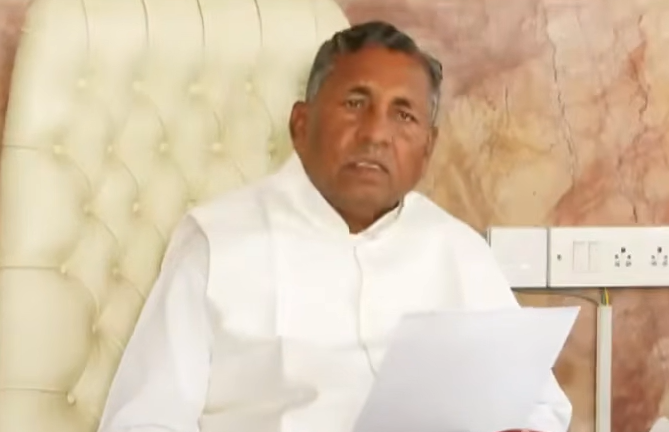
Addressing the ministerial session, Union Minister for Heavy Industries H. D. Kumaraswamy anchored India’s electric mobility push in the long-term national vision articulated by Prime Minister Narendra Modi. He said India’s commitment to Net Zero emissions by 2070 provides a clear strategic direction, with electric mobility sitting at the intersection of cleaner growth, energy security and industrial transformation.
Kumaraswamy noted that India’s EV journey has decisively moved from policy intent to on-ground implementation, reflecting rising confidence in the country’s policy framework and manufacturing capabilities. He emphasised that adoption is scaling rapidly across segments as ecosystems mature.
Published In Public Interest by thebengalurulive.com
Highlighting the role of the Ministry of Heavy Industries, the Minister said the focus is on strengthening the entire value chain—vehicle manufacturing, advanced batteries and charging infrastructure—to position India not only as a large EV market, but as a global manufacturing hub.
Stressing the environmental urgency, Kumaraswamy called for special focus on commercial vehicles and public transport, which contribute disproportionately to urban pollution. He said electrifying these segments delivers immediate environmental and social benefits.
In this context, the Minister launched the SIAM White Paper on the ‘Roadmap for Accelerated Adoption of E-Buses in India’, describing it as a key milestone for sustainable urban transport. The document, prepared by the Society of Indian Automobile Manufacturers, outlines practical pathways to scale e-bus deployment nationwide, including policy alignment, financing models and infrastructure planning.
Kumaraswamy also highlighted the broader industrial opportunity, calling electric mobility a multi-billion-dollar economic prospect. He said India’s digital public infrastructure and manufacturing base equip the country to set global benchmarks in EV production and deployment.
GEMS 2026 brought together policymakers, industry leaders, technology providers and global stakeholders, underscoring India’s intent to move from participation to leadership in the global electric mobility landscape. As India advances toward Net Zero 2070, electrified mobility is emerging as a defining lever in the journey toward Viksit Bharat—sustainable, self-reliant and globally competitive.
ಇದನ್ನೂ ಓದಿ: GEMS 2026ರಲ್ಲಿ ಭಾರತದ ಎಲೆಕ್ಟ್ರಿಕ್ ಮೊಬಿಲಿಟಿ ರಸ್ತೆನಕ್ಷೆ ಅನಾವರಣ; ನೆಟ್ ಜೀರೋ 2070 ದೃಷ್ಟಿಕೋನಕ್ಕೆ ಎಚ್.ಡಿ. ಕುಮಾರಸ್ವಾಮಿ ಒತ್ತು
About the Author