
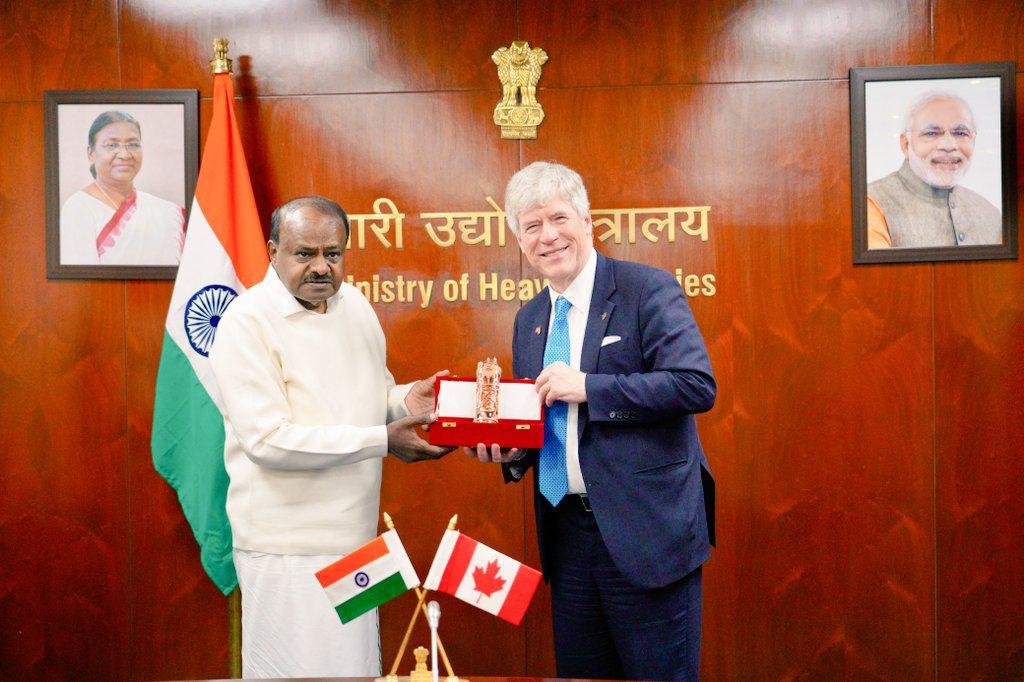
New Delhi, January 29, 2026: In a significant step towards strengthening bilateral cooperation in electric vehicles (EVs), critical minerals, battery manufacturing and sustainable industrial development, Union Minister for Heavy Industries and Steel H.D. Kumaraswamy held high-level talks with a Canadian delegation led by Tim Hodgson, Canada’s Minister for Natural Resources, in New Delhi on Wednesday.
The bilateral meeting was held at Udyog Bhavan, where both sides discussed expanding cooperation across the industrial ecosystem, with a focus on clean mobility, advanced manufacturing and resilient supply chains, aligned with Prime Minister Narendra Modi’s long-term vision for sustainable growth and self-reliance.
PM Modi’s Vision 2047 and Net-Zero Goals
Addressing the Canadian delegation, Kumaraswamy said India is working towards realising the Prime Minister’s vision of a Developed India by 2047, while also pursuing its commitment to achieve net-zero carbon emissions in the automobile sector by 2070.
“The automotive, heavy electricals and capital goods sectors are the key pillars supporting India’s sustainable growth trajectory,” the minister said.
Rapid EV Adoption and Policy Push
Highlighting India’s progress in electric mobility, Kumaraswamy noted that India—one of the world’s leading automobile manufacturing nations—has rapidly adopted EVs under the FAME-II scheme, which facilitated:
- Deployment of over 16 lakh electric vehicles
- Establishment of more than 10,900 public charging stations nationwide
He further explained that transformative initiatives such as PM E-DRIVE and PM E-Bus Seva are now supporting:
- Electric two-wheelers and three-wheelers
- Electric buses and trucks
- Charging infrastructure and testing facilities
“These initiatives are strengthening domestic manufacturing capabilities and ensuring that Indian products meet global safety and performance standards,” he added.
Focus on Batteries and Critical Minerals
A major focus of the discussions was the development of a robust and secure battery manufacturing ecosystem, along with collaboration on the production and utilisation of critical minerals essential for clean energy technologies.
Kumaraswamy informed the delegation that India, through the National Mineral Development Corporation (NMDC), is actively exploring coal assets in Canada to enhance India’s steel production capacity and strengthen long-term energy security.
Canada Sees India as Global EV Leader
Canadian Minister Tim Hodgson praised India’s rapid strides in industrial innovation and clean technology, describing India as a global leader in battery technologies and EV transportation solutions.
He expressed Canada’s willingness to:
- Share advanced battery technologies
- Support India’s growing demand for lithium, cobalt, graphite and rare earth elements
- Expand market access and industrial collaboration with Indian partners
Areas of Collaboration Discussed
The talks covered a wide range of cooperation areas, including:
- Joint frameworks for battery cell and component manufacturing
- Research and development on next-generation batteries
- Critical mineral supply chains
- Testing and certification infrastructure
- Clean mobility solutions
- Sustainable manufacturing processes
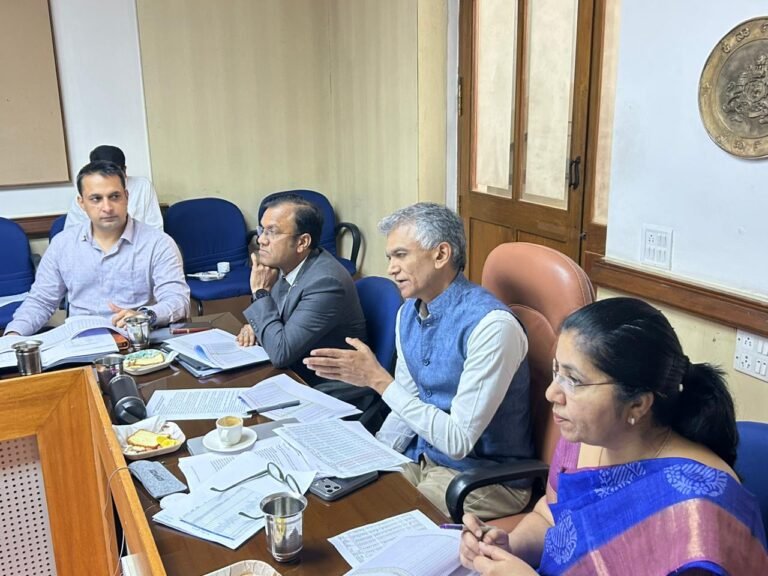
Senior officials from both ministries attended the meeting, including Kamran Rizvi, Secretary, Ministry of Heavy Industries, Hanif Qureshi, Additional Secretary, Vijay Mittal, Joint Secretary, Vinod Kumar Tripathi, Joint Secretary, Ministry of Steel, Amitava Mukherjee, CMD, NMDC, K.S. Murthy, CMD, BHEL, Other senior officials.
The India–Canada talks underscored a shared commitment to deepening strategic cooperation in electric mobility, clean energy and advanced manufacturing, with both nations agreeing to continue constructive dialogue and collaboration to build resilient, future-ready industrial ecosystems.
ಇದನ್ನೂ ಓದಿ: ಭಾರತ–ಕೆನಡಾ ನಡುವೆ ಇವಿ, ಬ್ಯಾಟರಿ ಮತ್ತು ಅಪರೂಪದ ಖನಿಜಗಳ ಕುರಿತು ಉನ್ನತ ಮಟ್ಟದ ದ್ವಿಪಕ್ಷೀಯ ಚರ್ಚೆ
About the Author