
Bengaluru: The Karnataka government has informed the High Court of Karnataka that a permanent Director General of Police (DGP) will be appointed within a week of receiving the Union Public Service Commission (UPSC) panel’s recommendations. The state clarified that specific names have already been forwarded to the UPSC high-level committee, which held its meeting on August 26, 2025.
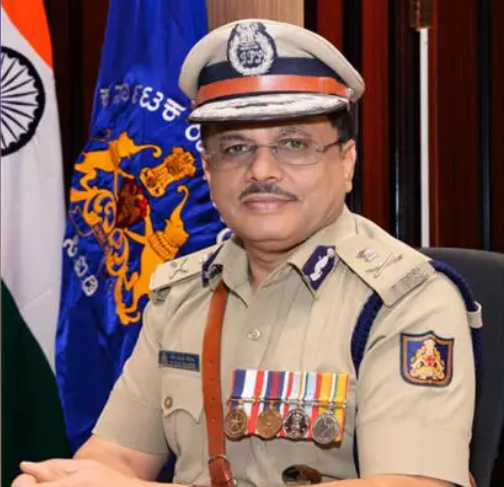
Following this assurance, the High Court dismissed a Public Interest Litigation (PIL) challenging the appointment of Dr. M.A. Saleem as in-charge DGP-IGP. The PIL was filed by advocate Sudha Katwa, who argued that the government violated Supreme Court directives by appointing an interim DGP instead of following the prescribed process.
A division bench led by Chief Justice Vibhu Bakhru and Justice C.M. Joshi took up the matter. Representing the state, Advocate General K. Shashikiran Shetty told the court that the UPSC committee’s report will soon be submitted and a permanent DGP will be appointed immediately thereafter.
However, the petitioner’s counsel, S. Umapathi, requested that the PIL be kept pending until the final notification is issued. The bench, after recording the Advocate General’s submission, ruled that the state had complied with the Supreme Court’s guidelines and therefore no further hearing was necessary.
Petitioner’s Objection
The petitioner argued that as per Supreme Court orders, the post of DGP must be filled through a due process involving a UPSC high-level committee that shortlists three senior IPS officers. The CM must then select one among them. The plea contended that Dr. Saleem’s appointment on May 21, 2025, as in-charge DGP was illegal since no UPSC recommendation had been made at that time.
Documents obtained under the RTI Act revealed that the UPSC had not made any recommendation for Dr. Saleem’s appointment, confirming procedural lapses. The petitioner insisted that the order appointing him as interim DGP should be quashed.
Despite these objections, the High Court held that since the state had already initiated the proper process and assured a permanent appointment soon, the PIL no longer survived.
About the Author