

Task force recommends umbrella Karnataka Education Commission chaired by CM
BENGALURU:
Even though a timeframe of 15 years has been granted to states to implement the new National Education Policy, the Karnataka government has decided to complete its implementation within 10 years, Deputy Chief Minister Dr Ashwath Narayan said on Saturday.
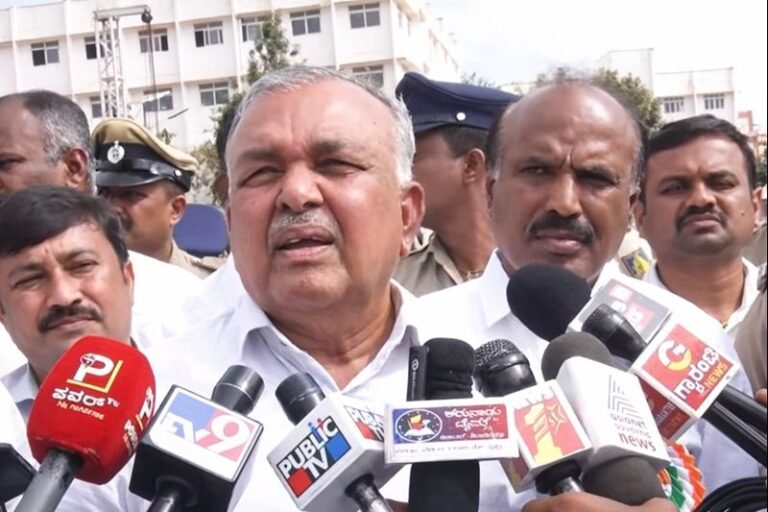
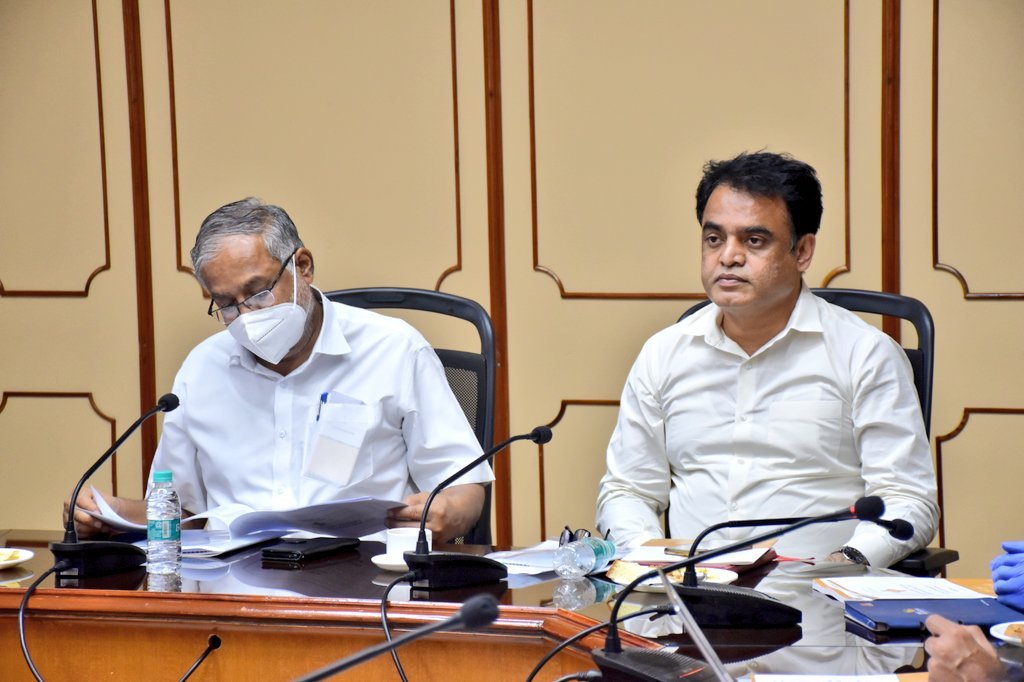
The Minister was addressing a presser at Vidhana Soudha after receiving the state task force’s final report on the NEP. The report was also submitted to Primary Education Minister S Suresh Kumar. The task force, headed by former IAS officer SV Ranganath, has, among other things, recommended the establishment of a Karnataka Shikshana Aayog/Karnataka Education Commission (KSA/KEC), to be headed by the Chief Minister.
“Coordination and alignment across a range of departments, functions, bodies, and entities are essential. To address this, the task force has suggested creating a Karnataka Shikshana Aayog (KSA)/Karnataka Education Commission (KEC). The CM should chair this body and should convene a review meeting at least twice a year. The Higher Education Minister as well as the Primary Education Minister should be its vice-chairpersons,” Narayan said. He added that the NEP would be implemented from the 2021-2022 academic year in a phased manner, and prior deliberations would be held with all stakeholders.
The task force, which was formed on March 4, came out with the final report with the assistance of three sub-committees and after several rounds of consultation with stakeholders.
Arun Shahapura, MLC, and MK Sridhar, member of the task force, were among those present.
Task force recommendations:
• Establish an Implementation Mission with specific targets that are mapped on a quarterly calendar for the next 3 years and a public review every quarter. Constitute an Implementation Task Force (ITF).
• Provide for an ‘implementation fund’ in SSK (Samagra Shikshana) and Karnataka State Higher Education Council (KSHEC).
• Establish the State School Standards Authority (SSSA) and the Karnataka Higher Education Regulatory Council (KHERC).
• Frame the new KSU Act for establishing the proposed Higher Education structure.
• Separation of powers within the existing bodies in the education department.
• Amendments to service rules and tenureships in KPS/school complexes; delineate teacher career progression and ensure vertical career progression.
• Establish Special Education Zones (SEZs) across identified sections within the state.
• Establish gender and disability funds along with other inclusive education measures for students from socio-economically disadvantaged groups (SEDGs).

School Education:
• Establish a Foundational Years Wing and a Literacy and Numeracy Wing.
• Curricular reforms should drive the transformation of the current structure of schooling to 5+3+3+4 (foundational, preparatory, middle and secondary stages). On one end, the focus should be on integrating standards XI and XII into the secondary stage, while on the other, a ‘Foundational Years’ wing needs to begin work on the 5-year integrated curriculum. The Department of State Educational Research and Training (DSERT) will have to revise the curriculum, particularly for the foundational and preparatory stages, and reduce the existing curriculum load.
• Curriculum and pedagogic revisions to be undertaken by DSERT for foundational and preparatory stages, while the middle and secondary stage to be taken up after NCF 2021 is released.
• Identify successful schools, particularly KPS and other special schools, and build them into School Complex Centres.
• Strengthen ‘Guru Chetana’ further and make it the exclusive teacher professional development platform in the state.
Released the final report prepared by the Task Force Committee on the implementation of #NEP2020 in a press conference today. Compliments to the task force for a comprehensive report.
— Dr. Ashwathnarayan C. N. (@drashwathcn) November 7, 2020
Karnataka is committed to the successful implementation of the NEP.@BSYBJP @nimmasuresh pic.twitter.com/1FoVbktZhh
Higher Education:
• The governance and regulation structure should be created through a new Karnataka State Universities (KSU) Act, which should provide for the roles and responsibilities of the independent and autonomous bodies – KHEC, KHEGC, KHERC and KRIC. The higher education institutions (HEIs) should have full autonomy to establish their respective boards of governors (BoGs) without any external interference.
• Initial handholding from KSHEC which can focus on mentor institutions so that they can become mentors and handhold other HEIs.
• Mentor institutions to be identified and workshops conducted to ensure alignment with policy principles.
• Institutional development plans (IDPs) to be developed by all HEIs.
• The government should enable an adequate number of Type 1: Research-intensive Universities (RIUs) and Type 2: Teaching-intensive Universities (TIUs) by identifying existing HEIs.
About the Author