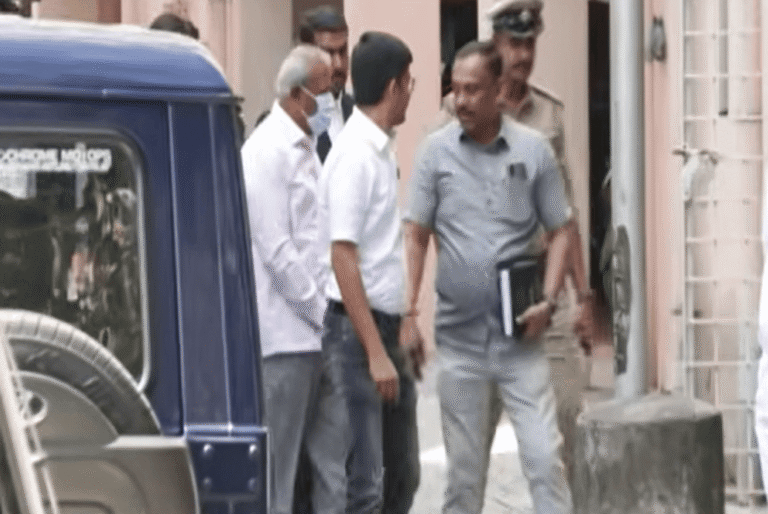
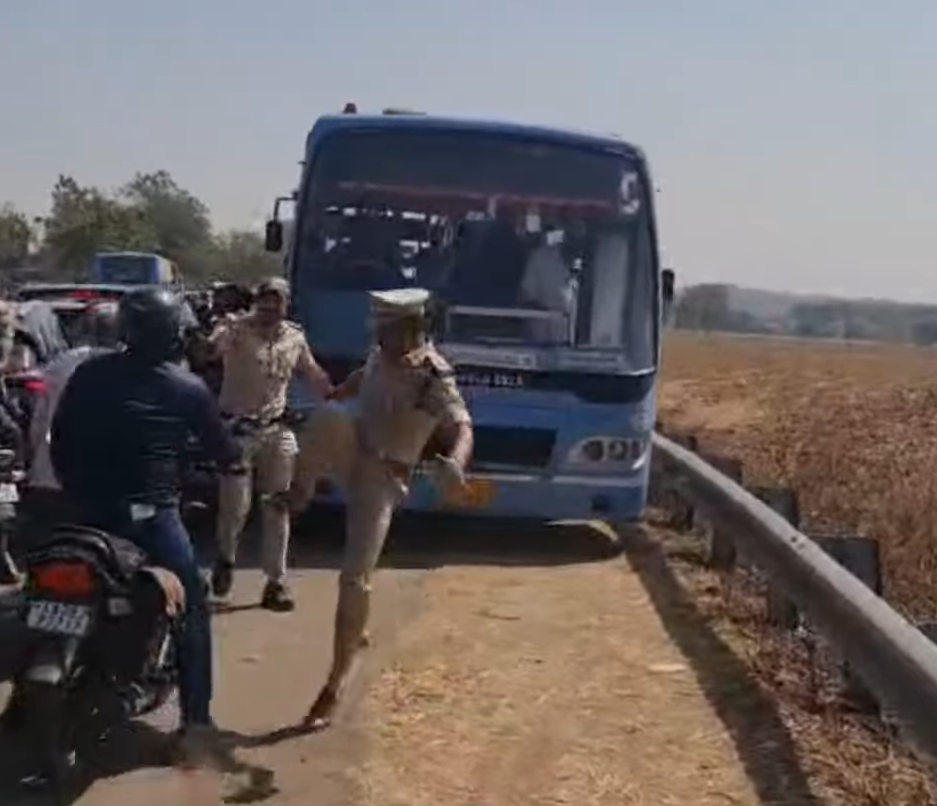
Mysuru / Bengaluru: A senior police officer’s conduct has triggered widespread outrage after a video surfaced showing Mysuru Superintendent of Police Mallikarjun Baladandi allegedly attempting to kick a biker while clearing traffic for the convoy of Chief Minister Siddaramaiah.
The incident occurred amid a traffic jam in Mysuru—ironically one that even the Chief Minister’s convoy was caught in—raising serious questions about the culture of VIP policing and abuse of authority on public roads.
In the viral footage, the SP is seen aggressively gesturing at a biker and making a physical kicking motion, apparently in an attempt to force him out of the way to clear the route for the Chief Minister’s vehicle. The moment, captured by bystanders, quickly spread across social media platforms, drawing sharp criticism from citizens, activists, and former police officers alike.
Public Road, Public Right
What has particularly angered citizens is the fact that the incident unfolded on a public road, during routine traffic congestion faced by ordinary commuters. There was no emergency, no law-and-order threat, and no special security alert warranting such behaviour.
The video has reignited an old but unresolved debate:
Are police officers meant to serve the public—or to intimidate citizens for the convenience of political VIPs?
“The system is of the people, by the people, and for the people—not of leaders, by officers, and for convoys,” one social media user remarked, echoing a sentiment that has since gone viral.
Even the CM Was Stuck—So Why the Bullying?
Notably, the traffic jam reportedly affected the Chief Minister’s convoy as well, making the aggressive clearing attempt all the more questionable. If the elected head of the government can wait in traffic like any other citizen, critics ask, why should civilians be bullied or physically threatened to create an artificial ‘green corridor’?
Former police officials have also weighed in, stating that physical intimidation of civilians without legal grounds violates policing ethics and could amount to misconduct under service rules.
VIP Culture vs Democratic Policing
The incident highlights a deeper structural issue within Indian policing:
the persistence of VIP-first policing, where officers prioritize political movement over citizen dignity.
While police are duty-bound to ensure the security of constitutional authorities, experts argue that this does not extend to physical coercion, public humiliation, or use of force against law-abiding citizens.
Legal observers note that any use or threat of force without provocation can attract disciplinary action and, in certain circumstances, criminal liability.
Silence from Authorities Raises More Questions
As of now, there has been no official clarification from the Mysuru Police Department or the State Home Department on whether an internal inquiry has been initiated into the conduct of the SP.
The absence of a prompt response has only intensified public anger, with many demanding accountability, suspension pending inquiry, and clear guidelines to prevent recurrence of such incidents.
A Moment That Demands Course Correction
This episode comes at a time when public trust in institutions is fragile and expectations of transparency are high. Citizens are no longer willing to accept the excuse of “protocol” for behaviour that borders on intimidation.
Police authority derives its legitimacy from the Constitution—not from the proximity to power.
Whether the Karnataka government chooses to treat this as an isolated lapse or a moment for systemic reform will send a strong signal about where it stands:
with citizens—or with unchecked VIP entitlement.
ಇದನ್ನೂ ಓದಿ: ಮುಖ್ಯಮಂತ್ರಿಗಳ ವಾಹನಕ್ಕಾಗಿ ರಸ್ತೆ ತೆರವುಗೊಳಿಸುವ ವೇಳೆ ಬೈಕರ್ಗೆ ಲಾತಿ ಹೊಡೆಯಲು ಯತ್ನಿಸಿದ ಮೈಸೂರು ಎಸ್ಪಿ; ‘ವಿಐಪಿ ಪೊಲೀಸ್ಗಿರಿ’ ವಿರುದ್ಧ ಆಕ್ರೋಶ
About the Author