FIle Image.
Bengaluru: At a time when the Leader of the Opposition in Parliament has repeatedly questioned the credibility of elections conducted using Electronic Voting Machines (EVMs), a comprehensive post-election study in Karnataka presents a sharply contrasting ground reality.
The Endline Knowledge, Attitude and Practice (KAP) Survey conducted during the 2024 Lok Sabha elections reveals that more than 83.61 per cent of voters in Karnataka expressed trust in the electoral process and the accuracy of EVMs, indicating strong public confidence despite ongoing political criticism.
(Source: Executive Summary – Findings, Page 31–32)
The KAP survey was commissioned to evaluate the impact of the Systematic Voters’ Education and Electoral Participation (SVEEP) programme of the and was formally approved and published by the Karnataka Monitoring and Evaluation Authority (KMEA) under the Government of Karnataka’s Department of Planning, Programme Monitoring and Statistics.
(Source: Foreword & Preface, Page 7–9)
The evaluation covered all 34 election districts in Karnataka and 102 Assembly constituencies, making it one of the most exhaustive voter perception studies undertaken in the state.
(Source: Methodology Overview, Page 31)
High Voter Participation Reinforces Trust
According to the survey:
- 95.75% of respondents reported that they voted in the 2024 Lok Sabha elections
- 81%+ voters agreed that “every vote counts”
- 83.61% expressed trust in EVMs and the fairness of elections
These findings underline that Karnataka’s electorate continues to place faith in electronic voting, even as national-level political narratives seek to cast doubt on the system.
(Source: Key Findings, Page 32)
Rahul Gandhi’s Allegations vs Karnataka’s Ground Reality
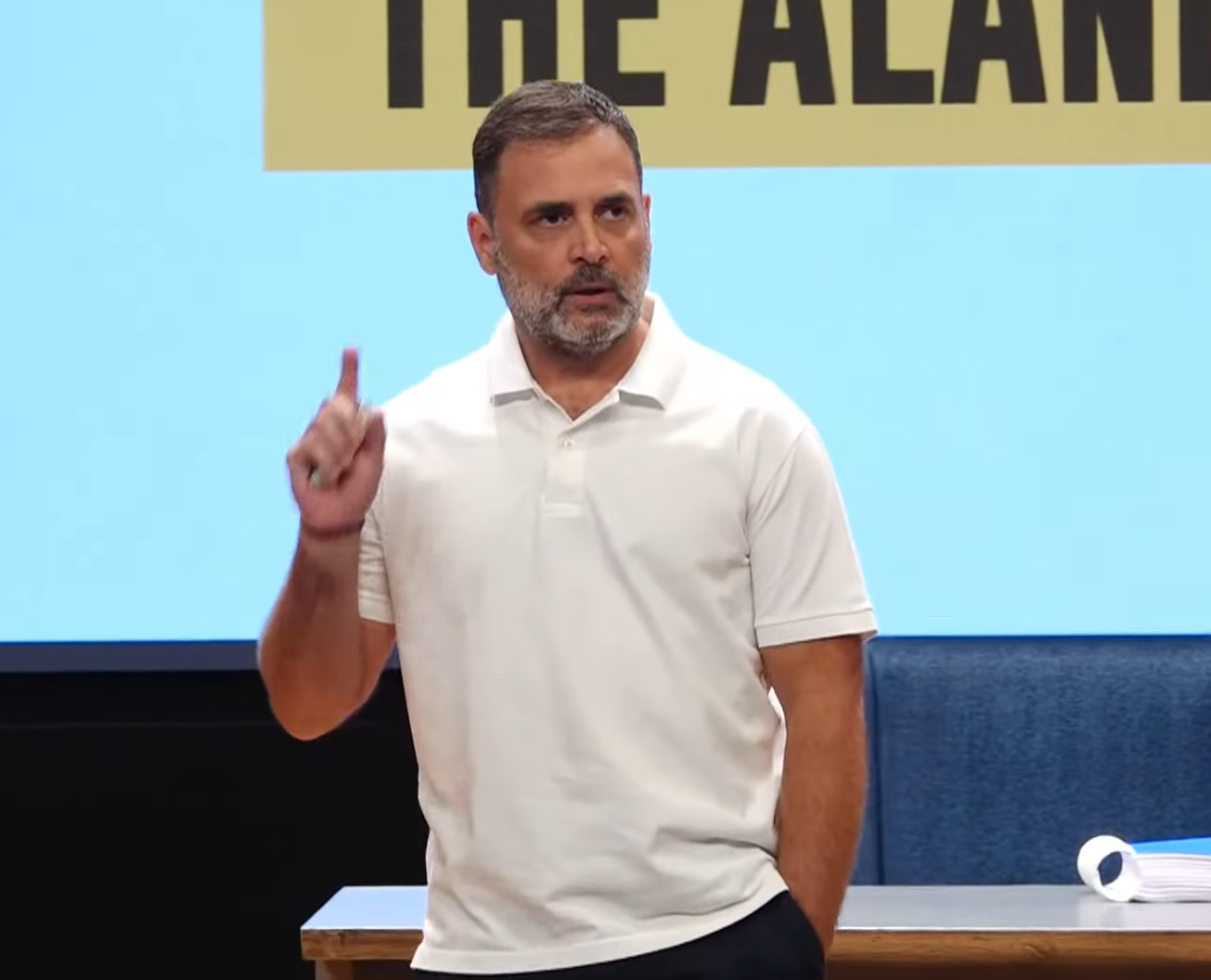
Rahul Gandhi has, on multiple occasions inside and outside Parliament, alleged manipulation and lack of transparency in elections conducted through EVMs. However, the KAP survey suggests that such concerns have not translated into widespread voter distrust in Karnataka.
The report’s qualitative findings note that while urban youth show dissatisfaction with political leadership and elite dominance, their scepticism is directed more at political actors than at the voting technology itself.
(Source: Qualitative Analysis, Page 32–33)
In rural Karnataka, voter confidence remains particularly strong due to direct engagement by Booth Level Officers (BLOs) and sustained awareness efforts under SVEEP, which the report identifies as a key trust-building factor.
(Source: SVEEP Impact Analysis, Page 32–33)
Political Irony Noted by Observers
The debate around EVMs has also revived political irony. EVMs were first introduced in India during the tenure of former Prime Minister Rajiv Gandhi, as part of electoral reforms aimed at eliminating booth capturing and ballot tampering. While the KAP report does not delve into the historical origins of EVMs, political observers note the contrast between the intent behind EVM adoption and current criticism from the same political lineage.
Gaps Acknowledged, But Trust Intact
The report does acknowledge shortcomings, particularly in urban voter outreach and digital awareness, with only 18.37% of respondents using election-related websites or apps. However, these gaps are framed as operational and awareness challenges, not issues of credibility or manipulation.
(Source: Findings on Digital Awareness, Page 32)
Conclusion
The KAP Survey makes it clear that Karnataka’s voters distinguish between political debate and their lived electoral experience. Despite national-level allegations questioning EVMs, the state’s electorate continues to demonstrate high participation, strong institutional trust, and confidence in the voting process.
For policymakers and election managers, the findings reinforce that strengthening voter education and transparency—not undermining electoral institutions—remains the key to sustaining democratic trust in Karnataka.
ಇದನ್ನೂ ಓದಿ: ರಾಹುಲ್ ಗಾಂಧಿ ಟೀಕೆಯ ನಡುವೆಯೂ ಕರ್ನಾಟಕದ 83% ಕ್ಕೂ ಹೆಚ್ಚು ಮತದಾರರಿಂದ EVMಗಳಿಗೆ ಬೆಂಬಲ: KAP ಸಮೀಕ್ಷೆ
Also Read: Siddaramaiah Questions Use of Old Voter Awareness Survey to Counter Rahul Gandhi’s Election Allegations
About the Author