
Bengaluru: Karnataka Chief Minister Siddaramaiah on Friday strongly criticised the Modi-led BJP government at the Centre, alleging that it is systematically dismantling rural self-governance and weakening the rural economy by replacing the Mahatma Gandhi National Rural Employment Guarantee Act (MGNREGA) with a new law, without consulting states or the public.
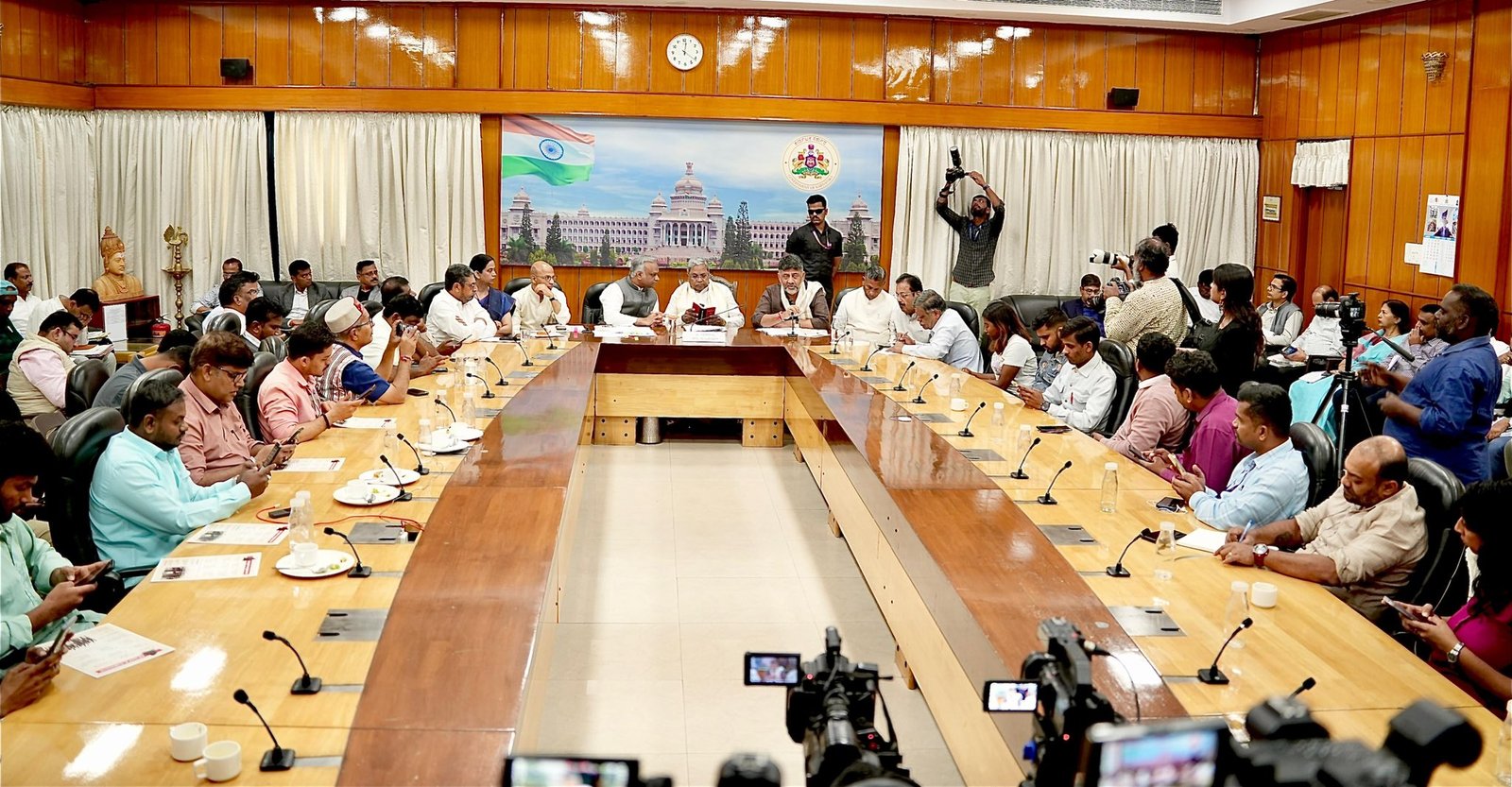
Speaking at a press conference at his official residence Krishna, Siddaramaiah said the Centre had repealed the landmark employment guarantee law introduced by the UPA government under former Prime Minister Manmohan Singh, and replaced it with the “VB G RAM G” (Viksit Bharat Guarantee for Rozgar Ajeevika Mission – Rural) Act in an “authoritarian manner”.
“The new law was introduced in Parliament on December 17 and passed the very next day after barely eight hours of discussion. No consultation was held with state governments, Gram Panchayats or workers. This reflects a dangerous centralisation of power,” the Chief Minister said.
Siddaramaiah said MGNREGA was a rights-based law that empowered rural workers to seek employment locally, helped create durable assets, strengthened village economies and ensured financial independence, particularly for women, Dalits and Adivasis. “All these guarantees have now been diluted or removed,” he alleged.
Citing official data, Siddaramaiah said India has 12.16 crore MGNREGA workers, of whom 6.21 crore are women, with 17% belonging to Scheduled Castes and 11% to Scheduled Tribes. In Karnataka alone, 71.18 lakh active MGNREGA workers were registered in 2025-26, including 36.75 lakh women (51.6%).
Under the earlier law, he said, workers were entitled to 100 days of guaranteed employment near their place of residence, with wages adjusted for inflation and fully funded by the Centre. “The new law restricts work to notified areas, removes wage indexation, bars employment for 60 days during the agricultural season, and shifts 40% of the financial burden onto states,” he said.
Siddaramaiah argued that this violates the spirit of Articles 258 and 280 of the Constitution, undermines fiscal federalism, and strips Gram Panchayats of their autonomy by reducing them to mere implementing agencies. “This directly contradicts the objectives of the 73rd Constitutional Amendment,” he said.
The Chief Minister accused the Centre of weakening welfare legislation while favouring corporate interests. “Over the last 11 years, the Centre’s biggest achievement has been renaming or dismantling nearly 30 welfare schemes launched by previous governments,” he said, citing examples such as Nirmal Bharat becoming Swachh Bharat and Indira Awas Yojana being renamed.
He warned that the new law would lead to higher rural unemployment, reduced participation of women in the workforce, increased distress among Dalit and tribal families, and a sharp decline in rural livelihoods, ultimately pushing workers into low-paid corporate labour markets.
Siddaramaiah said he had written to the Prime Minister on December 30, 2025, urging the Centre to withdraw the new law and restore MGNREGA in its original, strengthened form. “Women’s employment rights must be restored, Panchayat self-governance revived, and the rural economy protected,” he said.
He also warned that widespread protests could follow, similar to earlier farmers’ movements, if the Centre failed to reconsider its decision. “Rural workers, women and farmers are ready to resist this assault on their livelihoods within the framework of the Constitution,” Siddaramaiah said.
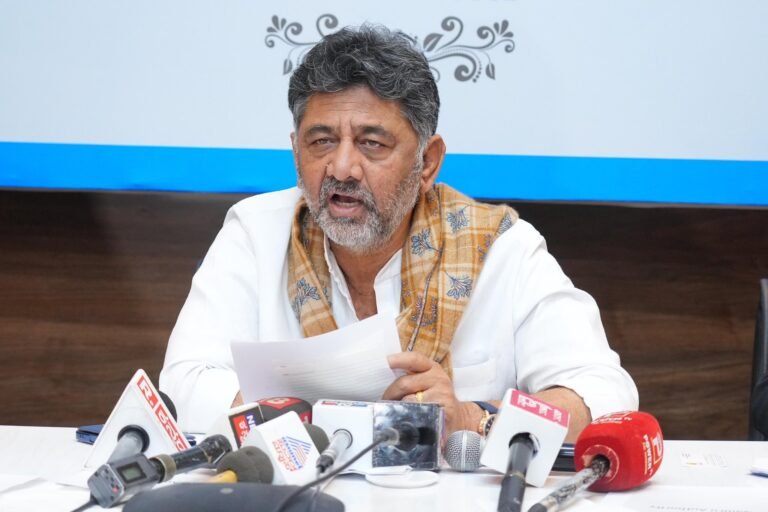
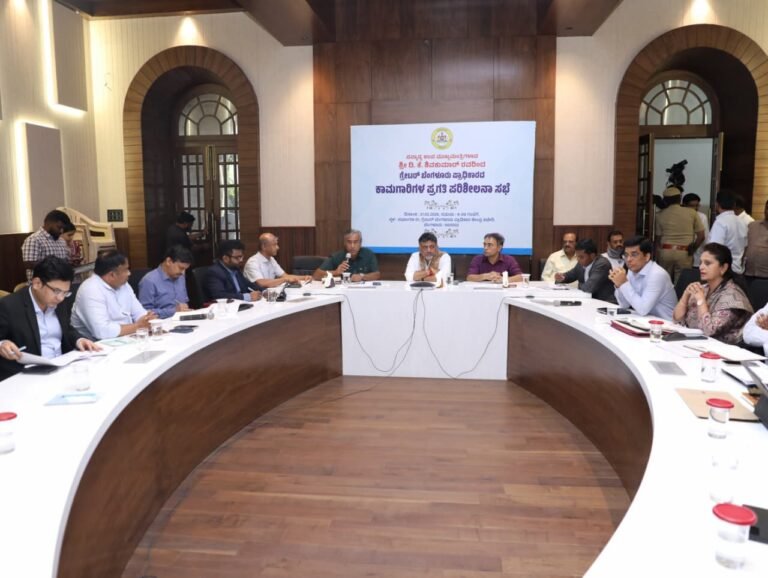
Deputy Chief Minister D.K. Shivakumar and several senior ministers were present at the press conference.
ಇದನ್ನೂ ಓದಿ: ಗ್ರಾಮೀಣ ಆರ್ಥಿಕತೆಯನ್ನು ನಾಶ ಮಾಡಲು ಮೋದಿ ಸರ್ಕಾರ ಮುಂದಾಗಿದೆ: ಮನರೇಗಾ ರದ್ದು ವಿರುದ್ಧ ಸಿದ್ದರಾಮಯ್ಯ ಆಕ್ರೋಶ
About the Author