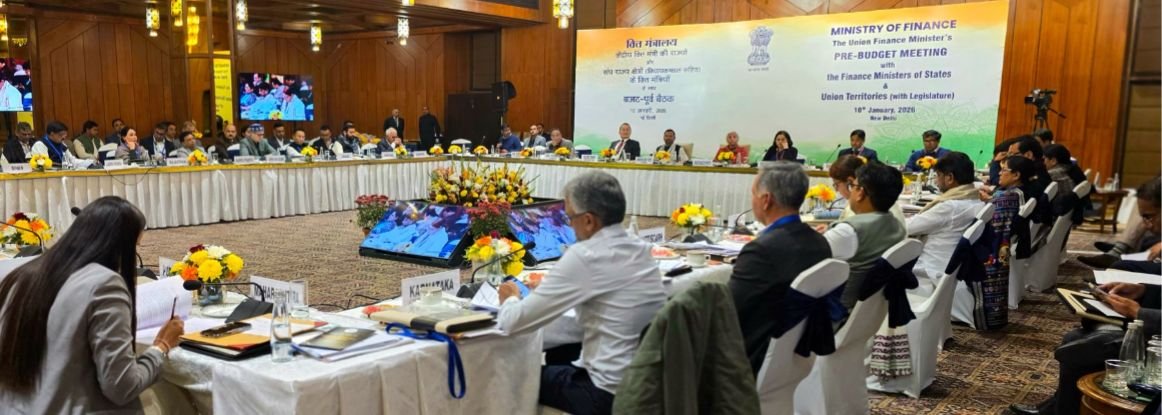
New Delhi / Bengaluru: Ahead of the Union Budget for 2026–27, the Karnataka government raised serious concerns over shrinking fiscal space, GST-linked revenue losses and rising social expenditure, while placing a comprehensive set of demands before the Centre.
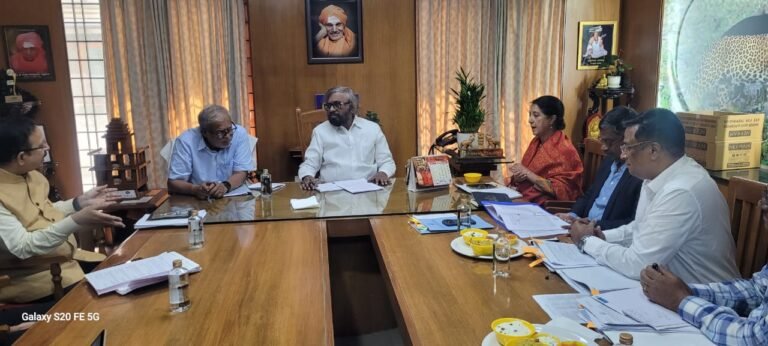
Representing the state at the Union Pre-Budget Meeting, Karnataka Agriculture Minister Krishna Byre Gowda thanked the Union Finance Minister and the Ministry of Finance for the opportunity to present the state’s views, while underlining that Karnataka continues to be a major contributor to India’s economic growth.
GST Rate Rationalisation and Revenue Loss
The minister highlighted that following GST rate rationalisation, Karnataka’s GST growth has dropped sharply from 12% to 5%, resulting in a ₹5,000 crore revenue shortfall this year and an estimated ₹9,000 crore annual loss.
Published In Public Interest by thebengalurulive.com
While the Centre has compensated its losses through cess on pan masala and excise duty on tobacco, states lack similar revenue-raising flexibility. Karnataka therefore sought a robust revenue protection mechanism, similar to the GST Compensation Cess, to fully offset state-level losses.
Sharing of Tobacco Excise and Pan Masala Cess
Pointing out that states bear the cost of public health, enforcement and regulation, the minister urged the Centre to include tobacco excise duty and pan masala cess in the divisible pool.
Karnataka proposed a 50:50 sharing formula to restore fiscal equity and strengthen cooperative federalism.
Jal Jeevan Mission: Pending Central Share
Under the Jal Jeevan Mission (JJM), Karnataka has released ₹24,598 crore, while the Centre’s contribution stands at ₹11,786 crore. To avoid disruption of drinking water projects, the state has already advanced ₹13,004 crore over and above its share.
The state requested urgent release of the pending central share, including reimbursement of advances, to ease fiscal stress and ensure timely completion of JJM works.
Shift from MGNREGA to G-RAM-G
Karnataka flagged the adverse impact of replacing the demand-driven MGNREGA with the allocation-based G-RAM-G scheme, noting a reduction in effective employment days.
To sustain livelihood security of nearly 13 crore person-days, the state would require around ₹2,000 crore, which it described as fiscally unsustainable. The state sought restoration of demand-based employment and uncapped central funding.
PM-AASHA and Price Deficiency Payments
Citing market gluts and perishability of crops, Karnataka proposed implementing the Price Deficiency Payment Scheme (PDPS) under PM-AASHA for eight crops — maize, soybean, mango, chilli, onion, tomato, turmeric and ginger.
The state requested an additional ₹796 crore allocation for timely PDPS rollout during 2026–27.
Frontline Workers and Social Security
The minister noted that central contributions toward Anganwadi workers, ASHA workers and cooks/helpers have remained stagnant for years.
Karnataka urged the Centre to revise the honorarium to:
- ₹8,000 per month for Anganwadi and ASHA workers
- ₹5,000 per month for cooks and helpers
The state also sought expansion of NSAP pension coverage to 50% of total beneficiaries, along with enhanced pension amounts.
Upper Bhadra Project
Karnataka renewed its demand to declare the Upper Bhadra Project as a National Project and release ₹5,300 crore in central assistance, as announced in the Union Budget 2023–24.
Finance Commission Grants and Disaster Relief
The state urged speedy release of pending 15th Finance Commission grants and disaster relief funds, including:
- Special Grants: ₹5,495 crore
- State-Specific Grants: ₹6,000 crore
- 15th FC shortfall: ₹4,044 crore
Regional Equity for Kalyana Karnataka
Highlighting persistent human development gaps, Karnataka sought additional central support for Kalyana Karnataka, beyond the state’s annual allocation of ₹5,000 crore.
Reiterating Karnataka’s commitment to fiscal discipline and national growth, Minister Krishna Byre Gowda appealed to the Union government to use Budget 2026–27 as an opportunity to restore fiscal balance, predictability and trust between the Centre and states.
ಇದನ್ನೂ ಓದಿ: ₹9,000 ಕೋಟಿ ಜಿಎಸ್ಟಿ ನಷ್ಟದಿಂದ ಉದ್ಯೋಗವರೆಗೂ: ಕೇಂದ್ರ ಬಜೆಟ್ಗೆ ಕರ್ನಾಟಕದ 9 ಪ್ರಮುಖ ಬೇಡಿಕೆಗಳು
About the Author